
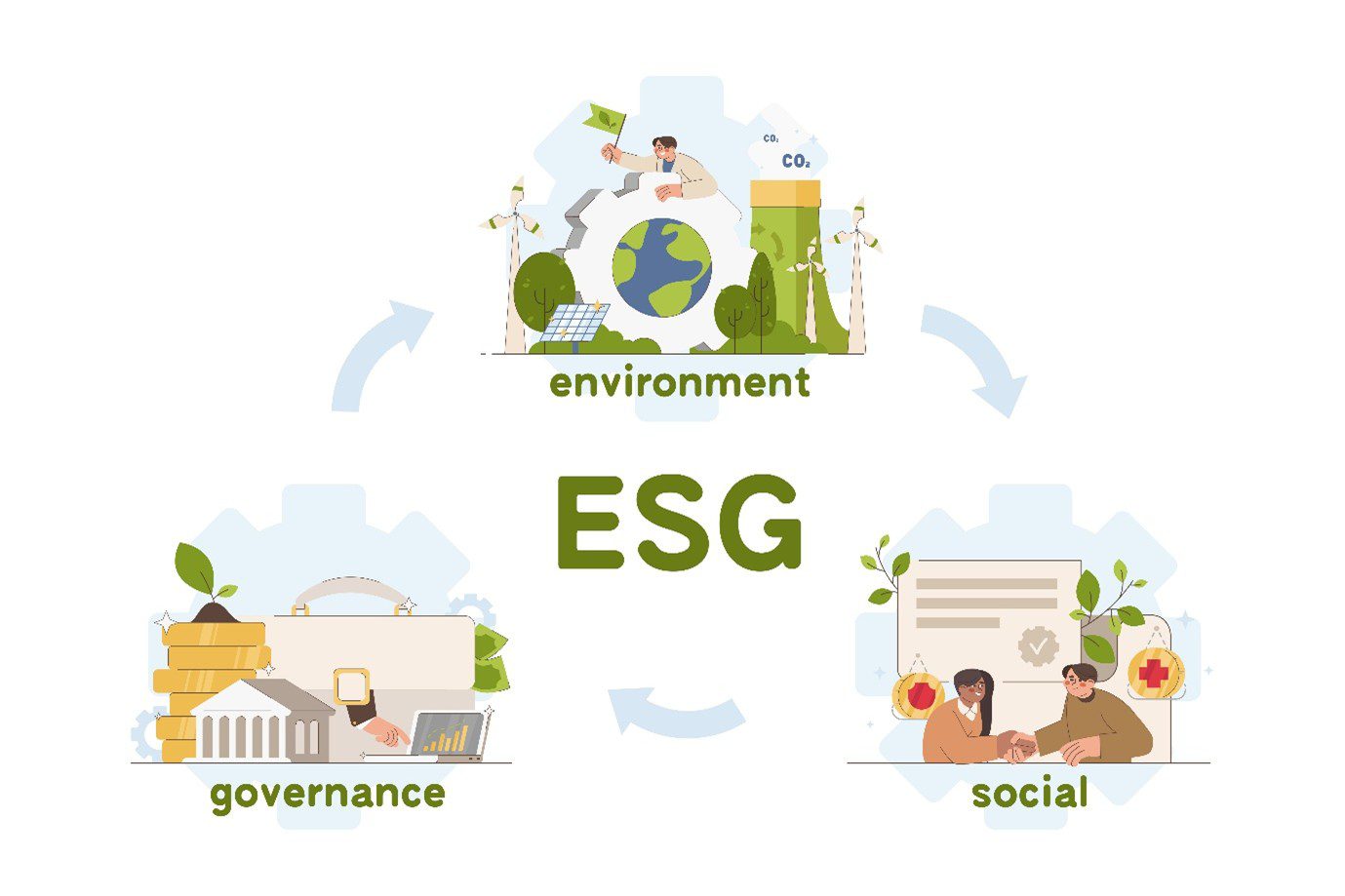
Your company files its annual ESG report. You check the boxes. You report the numbers.
But nothing really changes.
Energy consumption stays flat. Water usage doesn't improve. Supply chain sustainability remains vague. And when investors ask tough questions during earnings calls, you don't have clear answers.
This is the difference between ESG reporting and ESG strategy.
Reporting is about compliance. Strategy is about competitive advantage.
The ESG Reporting Trap
Most Indian companies treat ESG like tax filing an annual obligation that generates a report but doesn't drive business transformation.
What they miss:
- Companies with robust ESG roadmaps attract premium valuations (15-25% higher)
- Investors increasingly tie capital to ESG performance not just annual disclosures
- Employees prefer working for companies with credible sustainability commitments
- Supply chain partners now demand proof of ESG capability
- Green financing is increasingly cheaper than conventional financing
The companies winning aren't the ones with the best ESG reports. They're the ones with strategic ESG roadmaps.
Building a Future-Ready ESG & Sustainability Roadmap: What It Actually Takes
As ESG expectations continue to evolve, Indian businesses, especially in real estate, infrastructure, and manufacturing, are now moving from annual ESG reporting to structured, multi-year sustainability roadmaps.
Recently, we delivered a comprehensive ESG & Sustainability Roadmap for one of our clients in the Real estate sector, covering everything from current-state assessment, materiality assessment, GRESB readiness, risk frameworks, and stakeholder-driven implementation planning.
Here’s a snapshot of what a robust ESG roadmap truly includes
ESG Current-State Assessment
This baseline assessment forms the foundation for targeted, realistic ESG ambitions, and our work included:
- Current ESG data quality assessment
- Compliance benchmarking of ESG Data with Standards (BRSR, GRESB & GRI)
- Indicator-wise data collection templates considering cross-overs across ESG frameworks
- Identification & Implementation Roadmap of a suitable digital platform for streamlining
Materiality Assessment
This ensures the ESG roadmap aligns with stakeholder expectations, and we conducted:
- Internal & External Stakeholder mapping,
- List of material issues using sector standards and global frameworks,
- Tailored questionnaires for different stakeholder groups
- Materiality scoring & matrix development
ESG Strategy & Roadmap Development
Once the current state & priorities were clear, we created a short-term ESG roadmap including:
- ESG framework aligned to ambition, purpose, and performance metrics
- List of Policies on environment, social, and governance areas as per Global frameworks
- Green building strategy, feasibility for certification programs, including building-level audits
- Supply chain sustainability framework
Stakeholder Communication & Guidance
A roadmap succeeds only when the internal stakeholders of the organisation are aligned, and strong communication accelerates its Implementation and drives cultural change. We developed:
- ESG training plan for various internal & external stakeholder groups
- Guidance workshop modules for operational & functional teams
- Awareness creation for continuous monitoring of ESG data
Why This Matters
An ESG roadmap: Lays the organization’s ESG Goals, Performance Targets, KPIs; Guides the organization in achieving initiatives; Strengthens investor trust; Improves ESG performance; Unlocks green financing; Enhances compliance readiness; Supports net-zero commitments; Improves long-term asset value
A case study snapshot:
A private Indian organisation in the real estate sector sought support prior to their market listing, to strengthen their ESG performance, prepare for upcoming disclosure requirements (BRSR Core, GRESB, GRI standards), and build a unified sustainability roadmap aligned to global best practices.
Their leadership team aimed to move beyond compliance reporting and build a future-ready ESG framework integrated into operations, governance, and long-term strategy.
We conducted a detailed ESG performance review spanning data systems, disclosures, and management practices, and the outcome of this step was a clear diagnosis of the organisation’s ESG baseline, revealing strengths, gaps, and priority improvement areas. We executed a materiality assessment process aligned with global frameworks through which priority ESG issues for the organization were defined to address.
Based on priority themes, we developed a 5-year ESG roadmap supported by data collection & measurement templates, governance, policies, and implementation plans to help the organization with a practical, actionable roadmap enabling the organization to institutionalize ESG & Sustainability-driven initiatives, with clear decarbonization planning, risk, and sustainability pathways across their assets and business units. To ensure adoption and internal capacity building, we facilitated transformation to a well-informed organisation with clarity on roles, responsibilities, and next steps for ESG adoption.
Common Mistakes We See
Mistake 1: Setting ESG Targets Before Understanding the Current State
You can't set realistic targets if you don't know where you stand. Many companies announce ambitious goals then can't achieve them because they're disconnected from their current capability.
Mistake 2: ESG Strategy Developed in Isolation
ESG roadmaps fail when they're created by the sustainability team and dumped on operations. Successful roadmaps are co-created with operations, finance, HR, and supply chain teams.
Mistake 3: No Materiality Assessment
Companies invest equally in all ESG issues. But some matters far more to investors and business risk. A materiality assessment ensures resources are focused on high-impact areas.
Mistake 4: Reporting Without Implementation
Many companies report impressive ESG numbers but haven't actually implemented the underlying initiatives. When investors dig deeper, credibility collapses.
Mistake 5: No Monitoring System
Without ongoing performance tracking, ESG targets become aspirational rather than achieved.
What to Expect from an ESG Roadmap
In Year 1:
- Clear baseline established
- Key policies developed
- Governance structure in place
- Initial targets on track
In Years 2-3:
- Measurable progress against targets
- Improved investor relations
- Supply chain partners aligned
- Employee engagement strong
In Years 3-5:
- ESG integrated into business operations (not separate initiative)
- Competitive advantage established
- Net-zero pathway clear
- Valuation benefit realized
Is Your Company Ready?
Ask yourself:
- Do you have clear ESG targets aligned to business strategy?
- Do your teams understand why ESG matters to your company?
- Can you explain your ESG performance to institutional investors?
- Are you measuring the right metrics consistently?
- Is your supply chain aligned to your ESG commitment?
If you answered "no" to any of these, an ESG roadmap will transform your organization.
Ready to Move Beyond Compliance?
At Conserve Consultants, we've built ESG roadmaps for companies across real estate, infrastructure, and manufacturing sectors. Our framework has helped clients to achieve:
- 15-25% valuation premiums
- Reduced cost of capital
- Supply chain alignment
- Investor confidence
Discover your current state, gaps, and immediate opportunities
Questions? Let's talk. ESG strategy isn't one-size-fits-all it's customized to your business, industry, and stakeholder expectations.

