
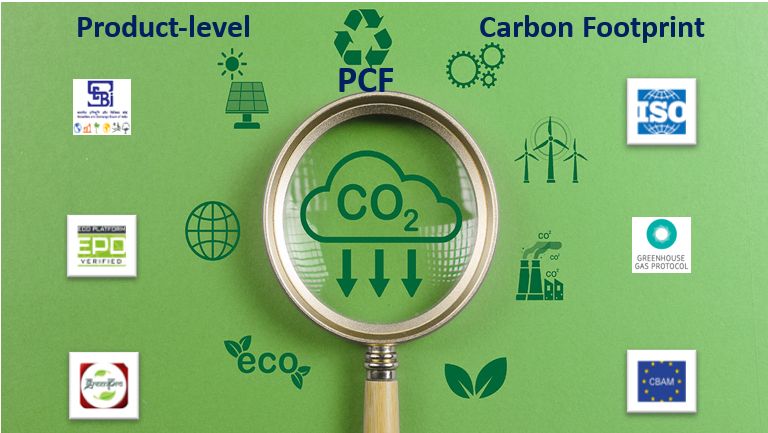
Indian manufacturers are entering a new era where product-level carbon transparency is vital for business continuity, export competitiveness, regulatory compliance, and investor confidence, requiring deeper lifecycle disclosures.
Through its partnership with ARS Steels, Conserve Consultants developed and implemented an Environmental Product Declaration (EPD), enabling the company to transparently disclose its product-level carbon footprint, align with EU CBAM requirements, and enhance export competitiveness for steel shipments to the EU. In another pioneering effort, the consultants guided Coega Steel to become South Africa’s first billet manufacturer to achieve an EPD, facilitating its access to global sustainable markets. These initiatives collectively showcase the value of EPDs in securing green building rating credits and meeting the growing demand from real estate and construction sectors for verified carbon footprint data.
Why it Matter More Than Ever for Indian Manufacturers?
1. EU CBAM’s Transitional phase requires Indian exporters from the Sectors like steel, aluminium, cement, fertilisers, hydrogen and electricity to declare & report Product-Level Emissions (called as specific embedded emissions) for every shipment entering the EU and from 2026 onward, purchase or surrender of CBAM certificates shall be implemented as part of the Definitive phase of CBAM.
2. Green building rating systems and ECSBC 2024 are driving construction material manufacturers to adopt EPDs, ensuring product-level carbon footprint data is readily available to the Real estate & Construction sector in India and also meet global buyer needs. Rating systems award credits for Ecolabel-certified products, while ECSBC 2024 requires developers to report embodied carbon per sqm of building.
3. BRSR Core by SEBI requires companies to report GHG emissions at the product/category level, moving beyond organization-wide metrics. From FY 2026–27, the top 1,000 listed companies must obtain third-party assurance of their BRSR Core disclosures. In addition, ESG disclosures for significant value-chain partners (≥2% of purchases or sales) are encouraged to strengthen upstream and downstream ESG transparency through BRSR.
4. The BEE-led Indian Carbon Market (ICM) has introduced a compliance mechanism and carbon trading framework covering nine energy-intensive sectors by 2026, which will gradually require product-specific CO₂ measurement and reporting.
Partner with Conserve Consultants to unlock the benefits of Product Carbon Footprint disclosure. Ensure your manufacturing business stays compliant, competitive, and climate-resilient in global markets. Contact us today for expert guidance.
CII Southern Region |CII GreenPro Type 1 EcoLabel |EPD International
hashtag#ProductCarbonFootprint hashtag#IndianManufacturers hashtag#EUCBAM hashtag#GHGReporting hashtag#ESG hashtag#CarbonTransparency hashtag#ClimateResilience
