
Whole-Building Life Cycle Assessment: One Project, Multiple Benefits
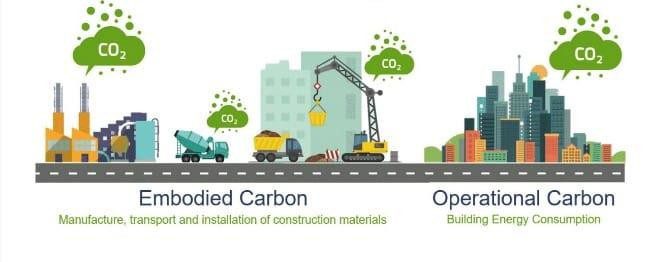
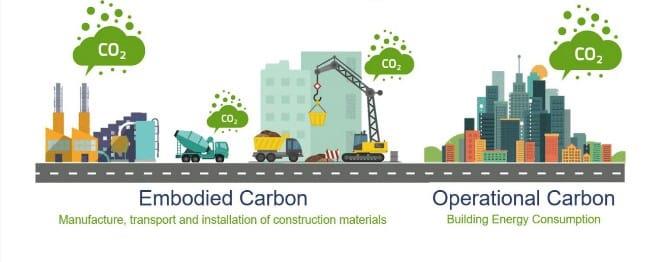
As India moves toward low-carbon construction, building-level Life Cycle Assessment is no longer optional; it has become the backbone of embodied carbon compliance, green certification, ESG disclosures, and future Net Zero pathways.
Recently, we delivered a comprehensive Whole Life Carbon study for a large, multi-storey commercial building covering:
- Cradle-to-Grave LCA (A1–A5, B1–B7, C1–C4 & D)
- Pre-construction LCA to influence design decisions
- As-built LCA using actual BOM, product EPDs, and construction site data
- Building element-wise & Material resources-wise hotspots of Global Warming Potential
- Comparative scenarios for low-carbon materials & systems
- Building EPD preparation aligned with ISO 14025 & EN 15804
Maximizing Impact with Early-Stage LCA in Building Design
Here is a glimpse of the benefits and opportunities unlocked by our client with the help of 1 comprehensive Whole Building LCA:
1. USGBC LEED Embodied Carbon Credit points
The LEED v4 and v4.1 give significant importance to Whole building LCA-related credits for buildings targeting Platinum Certification, and the upcoming LEED v5 mandates Whole Building LCA to baseline embodied carbon and demonstrate performance improvements, contributing toward Platinum rating. Product-level EPDs and low‑carbon procurement pathways provide the data needed, with LCA serving as direct documentation to boost scores and reduce certification costs.
2. IGBC v4 & IGBC Net Zero Carbon Rating System
Both IGBC v4 (Pilot phase) and IGBC Net Zero Carbon rating systems emphasize Material sustainability, embodied carbon quantification, Low-carbon construction pathways, Circularity, and lifecycle impact reductions. Whole Life Carbon assessments give building owners measurable baselines for IGBC credit compliance and targeting for long-term decarbonization.
3. Future-proofing against Regulations and Readiness for ESG
Building LCAs indirectly provides usable ESG data across multiple frameworks & alignment with the global building decarbonization market through Scope 3, BRSR Core KPI on GHG intensity per asset built, indicators of asset-level GRESB Assessments, SBTi target setting & CDP Assessments. Embodied carbon assessment through Building LCA future-proofs the project on account of the upcoming ECSBC norms by the Bureau of Energy Efficiency, National Building Code 2025 version, and preparedness for sustainability-linked financing frameworks by various NBFCs, international investments.
4. Lower Carbon, Lower operational Cost
During pre-construction LCA, multiple “what-if” scenarios were modelled through which we suggested sustainable alternatives, Low-carbon products & recycled materials, composite vs conventional construction methods, and low-carbon building systems. The direct impact identified from this initiative accounts for 10–18% emission reduction opportunities with associated cost implications mapped clearly before the actual construction.
Partner with Conserve Consultants to run a Whole-Building LCA and convert your design decisions today into future-ready, low-carbon, investment-attractive assets.
To tag: @GRESB @IGBC @CII @USGBC @SEBI BRSR @BEE @NBC @GHGProtocol @ISO @OneclickLCA
